
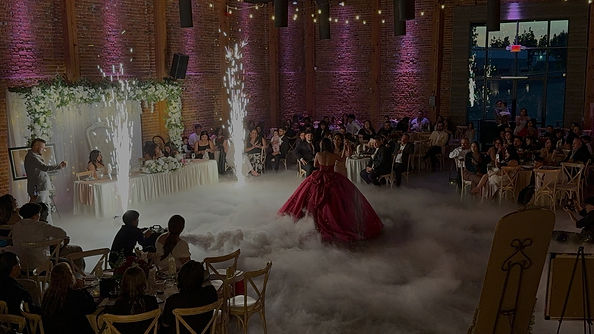
Wedding Ceremony and Reception at the Same Venue
Holding your wedding ceremony and reception at the same venue is convenient, simpler to plan, and often less expensive than using two locations. Your guests do not travel between sites, you set up once, and your timeline flows smoothly from vows to reception. The main tradeoff is that the space may need a short transition, or "flip," to reset from ceremony to reception, which a cocktail hour easily covers. For most couples, the benefits clearly outweigh the tradeoffs.
This guide comes from the team at SGV Event Center, a family-owned indoor event venue in La Puente, in the San Gabriel Valley. We host the ceremony and reception in the same space across two indoor rooms, so we see firsthand how a one-location wedding day actually runs. Below is an honest look at the benefits, the tradeoffs, and how to make a same-venue wedding work beautifully.
The Short Answer
A single-venue wedding means your ceremony and reception happen at one location, one after the other. It is the simplest setup for you and your guests, and it usually saves money by combining two rentals into one. The one thing to plan around is the transition between the ceremony and the reception, which is easy to handle with a cocktail hour. If simplicity and value matter to you, one venue is hard to beat.
The Benefits of One Venue
There are good reasons so many couples choose a single location.
Guest convenience
Your guests stay in one place all evening. There is no driving from a church to a reception hall, no getting lost between venues, and no awkward gap where guests wander off. Older guests and those with young children especially appreciate not having to pack up and relocate mid-celebration.
Less transportation to manage
With two venues, you have to think about how guests, and sometimes the wedding party, get from one to the other. That can mean shuttles, extra travel time, and parking twice. One venue removes all of that, which simplifies your planning and lowers costs.
One setup, one team
When everything happens in one place, your vendors set up once, and one team runs the whole day. Decor, flowers, and rentals do not have to be split or moved between locations. This usually means fewer rental fees, less coordination, and fewer things that can go wrong.
A smoother timeline
A single-venue day flows naturally. There is no travel gap to build into your schedule, so you get more actual celebration time. The day moves from ceremony to cocktail hour to reception without the stops and starts that two locations create.
A built-in weather backup
At an indoor venue, weather is never a worry. Rain, heat, or wind will not disrupt your day, and you do not need a separate rain plan or tent for an outdoor ceremony. Your ceremony and reception are both protected under one roof.
More time for photos
Because no one is traveling between sites, you gain time. That extra time often goes to photography, giving you and your photographer more room to capture the moments that matter without rushing to the next location. Travel between two venues can eat up an hour or more of your day, time that could otherwise go to portraits, family photos, or simply enjoying your celebration. With one location, your photographer can make the most of the space, the light, and the flow of the day at an unhurried pace.
Lower overall cost
Combining the ceremony and reception into one rental is usually cheaper than paying for two separate venues, plus transportation between them. For couples watching their budget, this is one of the biggest advantages. You save not only on a second venue fee but also on doubled setup costs, extra decor for a second location, and shuttles or transportation between sites. Those hidden two-venue expenses add up quickly, which is why a single location often stretches a wedding budget further. Our guide on how much wedding venues cost in Los Angeles explains how venue pricing works.
Who a Same-Venue Wedding Is Best For
A one-location wedding suits most couples, but it is an especially strong fit in a few situations. If you have many guests traveling from out of town, keeping everything in one place makes their day far easier. If you have older guests or young children in attendance, removing the mid-event drive is a real kindness. If your budget is a priority, combining two rentals into one is one of the simplest ways to save. And if you want a relaxed, low-stress day, a single venue removes an entire layer of logistics.
A two-venue wedding can still make sense if you want a specific ceremony location, such as a family church, paired with a separate reception space. But for couples who value convenience, budget, and simplicity, one venue is usually the better path.
Indoor Comfort All Day
An indoor venue adds one more advantage to the single-location model: consistent comfort. Your guests are never too hot, too cold, or caught in the rain, and the day is not at the mercy of the weather. From the ceremony through the last dance, everyone stays comfortable in a climate-controlled space, and you never need a backup plan for an outdoor ceremony that the weather might ruin. For a Southern California wedding, where an afternoon can turn warm quickly, that steady comfort is easy to appreciate.
The Tradeoffs to Plan For
A same-venue wedding is not without a few things to manage. Knowing them upfront keeps the day smooth.
The room flip. If your ceremony and reception happen in the same space, the venue needs time to reset the room, moving chairs, setting tables, and adjusting the layout. This is where a cocktail hour comes in.
Keeping guests occupied during the transition. While the space is reset, guests need somewhere to be, which a cocktail hour or a separate area handles.
Less scenery variety. Two venues give you two backdrops. One venue gives you one, though good decor and lighting easily make a single space feel different across the day.
None of these are dealbreakers. They are simply details to plan around, and an experienced venue team handles them routinely.
How the Room Transition Works
There are two common ways venues manage a single-location wedding.
Approach | How it works | Best when |
Room flip | One space is reset from ceremony to reception during cocktail hour | The venue has one main space |
Separate spaces | Ceremony in one area, reception in another | The venue has more than one space |
With a room flip, the cocktail hour is the key. While guests enjoy drinks and appetizers in a separate area, the venue team resets the main room. By the time guests return, the space is transformed for dinner and dancing. With separate spaces, guests simply move from the ceremony area to the reception area, and no flip is needed. Ask your venue which approach they use so you can plan your timeline. Our own space works this way across two indoor rooms, the Louisiana Room, which seats up to 300, and the Bourbon Room, an intimate option for up to 200, so a couple can hold the ceremony and reception together in whichever room fits their guest count. To see how different layouts come together, our post on venue layout ideas for a wedding is a helpful reference.
Making the Cocktail Hour Work
The cocktail hour is the secret to a smooth same-venue wedding. It gives your guests something enjoyable to do while the room is reset, and it keeps the energy up between the ceremony and the reception. Serve drinks and appetizers, add some music, and let guests mingle. Hold it in a separate area, such as a patio, lobby, or lounge space, so the main room can be turned over without an audience. Done well, guests barely notice the transition is happening at all.
A typical cocktail hour runs about 45 minutes to an hour, which is usually enough time for the venue team to complete a room flip. It also serves a second purpose: it is often when the couple takes photos, so the cocktail hour keeps guests happily occupied while you step away for portraits. If your venue uses separate spaces instead of a flip, the cocktail hour still works beautifully as a natural bridge between the ceremony and the reception, giving everyone a relaxed moment before dinner begins.
A Sample Same-Venue Timeline
Here is how a one-location wedding day often flows.
Time | What is happening |
Ceremony | Guests are seated, vows take place |
Cocktail hour | Guests enjoy drinks and appetizers while the room is reset |
Reception entrance | Guests return to the transformed space |
Dinner and toasts | The reception meal and speeches |
Dancing | The celebration continues |
Because there is no travel between sites, this timeline stays tight and easy to follow, which is one of the quiet joys of a single-venue wedding.
Questions to Ask a Venue
If you are considering a one-location wedding, ask each venue:
Can you host both the ceremony and the reception?
Is it a room flip or separate spaces?
Where will the cocktail hour take place during any transition?
How much time does the transition take?
Is there a weather backup for any outdoor portion?
How does the timeline usually flow for a same-venue wedding?
Clear answers help you picture your day and confirm the venue fits your plans. You can explore our venues, see how we approach weddings, and contact us to talk through what would work for your celebration.
Frequently Asked Questions
Is it better to have the ceremony and reception at the same venue?
For many couples, yes. One venue is more convenient for guests, simpler to plan, and usually less expensive than two locations plus transportation. It also creates a smoother timeline and, at an indoor venue, a built-in weather backup. The main tradeoff is a short room transition, which a cocktail hour easily covers. If simplicity and value matter to you, one venue is a strong choice.
What is a room flip at a wedding?
A room flip is when a venue resets a single space from the ceremony setup to the reception setup. During the cocktail hour, the team moves chairs, sets tables, and adjusts the layout so the room is transformed for dinner and dancing by the time guests return. It is a common and smooth way to hold both the ceremony and reception in one main space.
How do you handle the time between the ceremony and reception at one venue?
A cocktail hour is the standard solution. While guests enjoy drinks and appetizers, usually in a separate area like a patio or lounge, the venue resets the main room. This keeps guests happy and occupied, maintains the energy of the day, and gives the team time to turn the space over without an audience. Guests often barely notice the transition.
Does having one venue save money?
Usually, yes. Combining the ceremony and reception into a single rental is typically cheaper than paying for two venues, and it removes transportation costs between locations. You also tend to have fewer rental and setup fees since everything happens in one place. For budget-conscious couples, a single venue is one of the more effective ways to lower the total cost.
Do you lose photo variety with one venue?
Not necessarily. While two venues offer two backdrops, a single venue can still provide plenty of variety through different areas, good lighting, and decor changes across the day. And because no one travels between sites, you often gain time for photos, which lets your photographer capture more moments without the pressure of a tight travel schedule.



Comments